Learn › Finding Coordinates
Finding Coordinates
How to read the coordinates of a point on a grid, with two worked examples.
How it works
A point's coordinates are two numbers in brackets, (x, y). The first number, x, is how far across from zero along the bottom axis. The second, y, is how far up the side axis.
Always go across first, then up: "along the corridor, then up the stairs".
Worked examples
1. Point a on the first grid
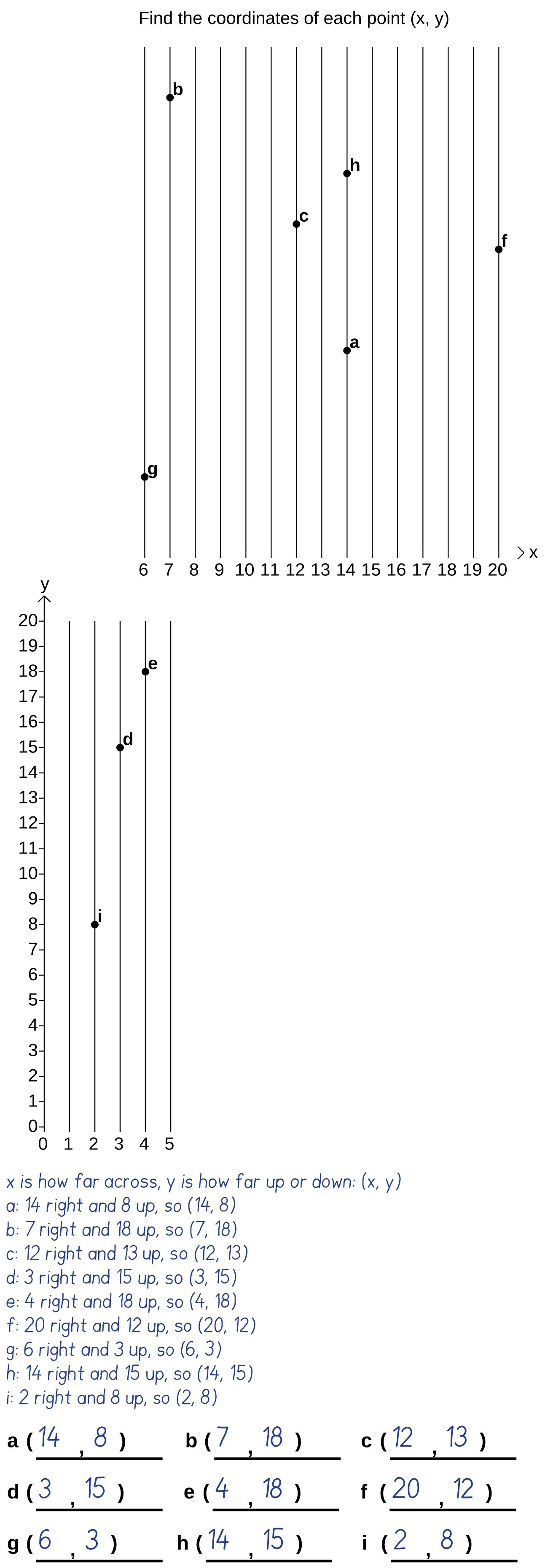
- From point a, go straight down to the bottom axis: it is at 14. That is x.
- From point a, go straight across to the side axis: it is at 8. That is y.
- Across first, then up: a is (14, 8).
2. Point b on the second grid
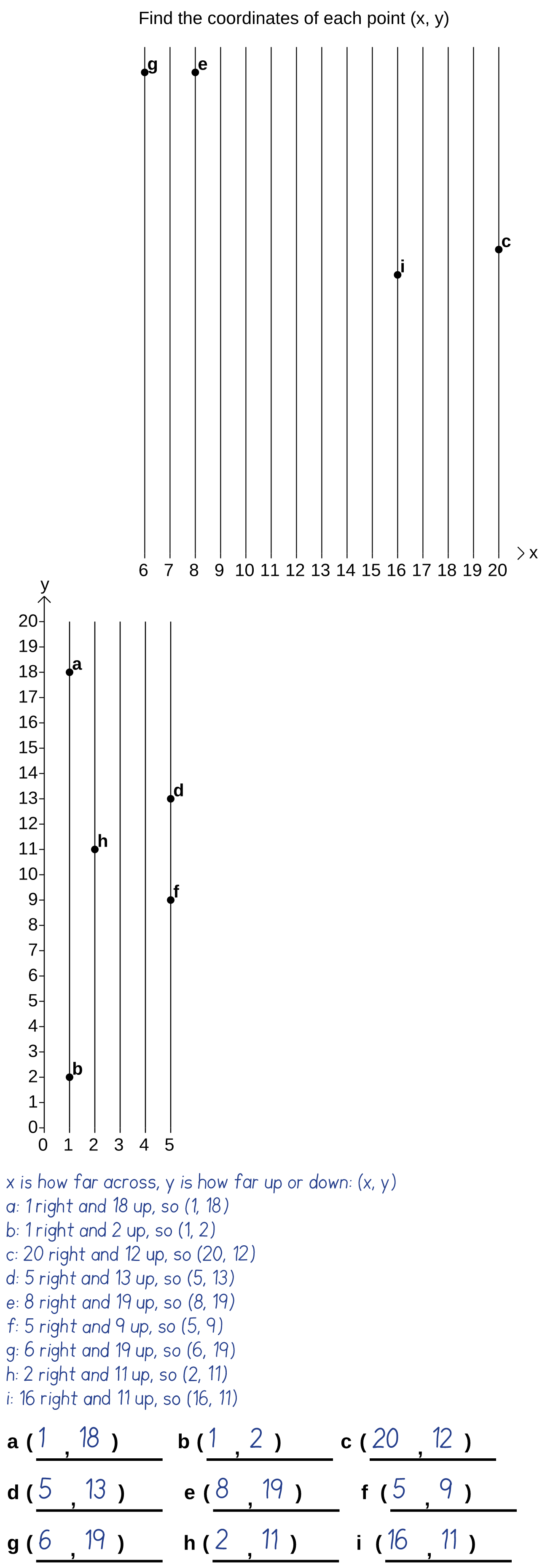
- Straight down from b to the bottom axis: 1. That is x.
- Straight across from b to the side axis: 2. That is y.
- Across first, then up: b is (1, 2), not (2, 1).
The common mistake
Writing the numbers the wrong way round. (2, 1) and (1, 2) are different points. The across number always comes first.
Practise this topic on printed sheets that mark themselves.
Start practisingSuggest an improvement
Something unclear, or a better way to explain it? Tell us and we will improve this page.