Learn › Bar Charts: Comparing, Adding and Finding Differences
Bar Charts: Comparing, Adding and Finding Differences
How to read a bar chart and answer how many more, fewer and altogether, with two worked examples.
How it works
Each bar's height is read off the scale at the side: go straight across from the top of the bar to the numbers. Read every bar you need before you calculate.
Then the question tells you what to do. "How many more" or "how many fewer" means subtract the smaller from the bigger. "Altogether" or "in total" means add.
Worked examples
1. How many more Apples than Lemons? (first chart)
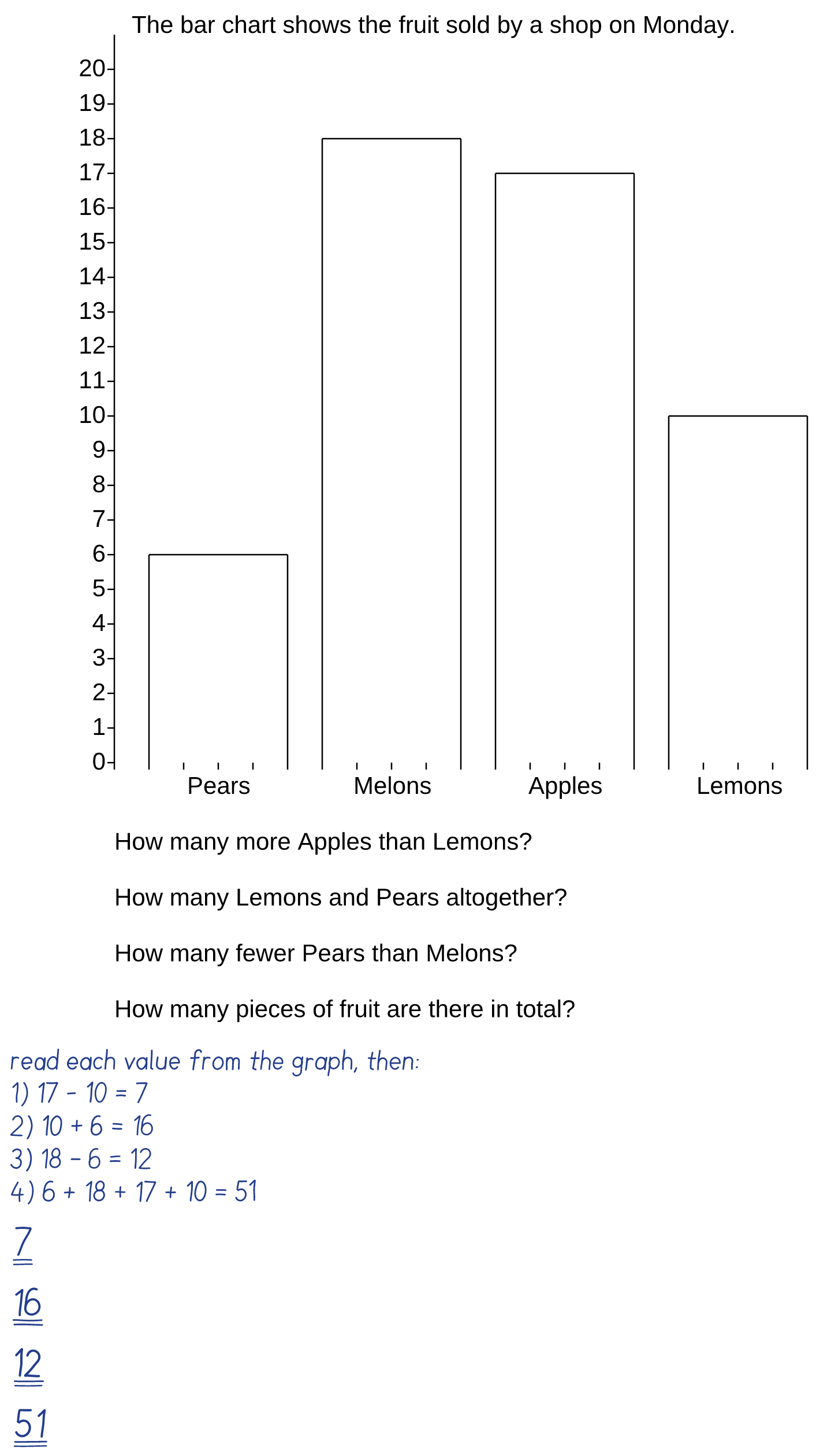
- Read the bars: Apples reach 17, Lemons reach 10.
- "How many more" means find the difference.
- 17 − 10 = 7.
2. How many pieces of fruit in total? (second chart)
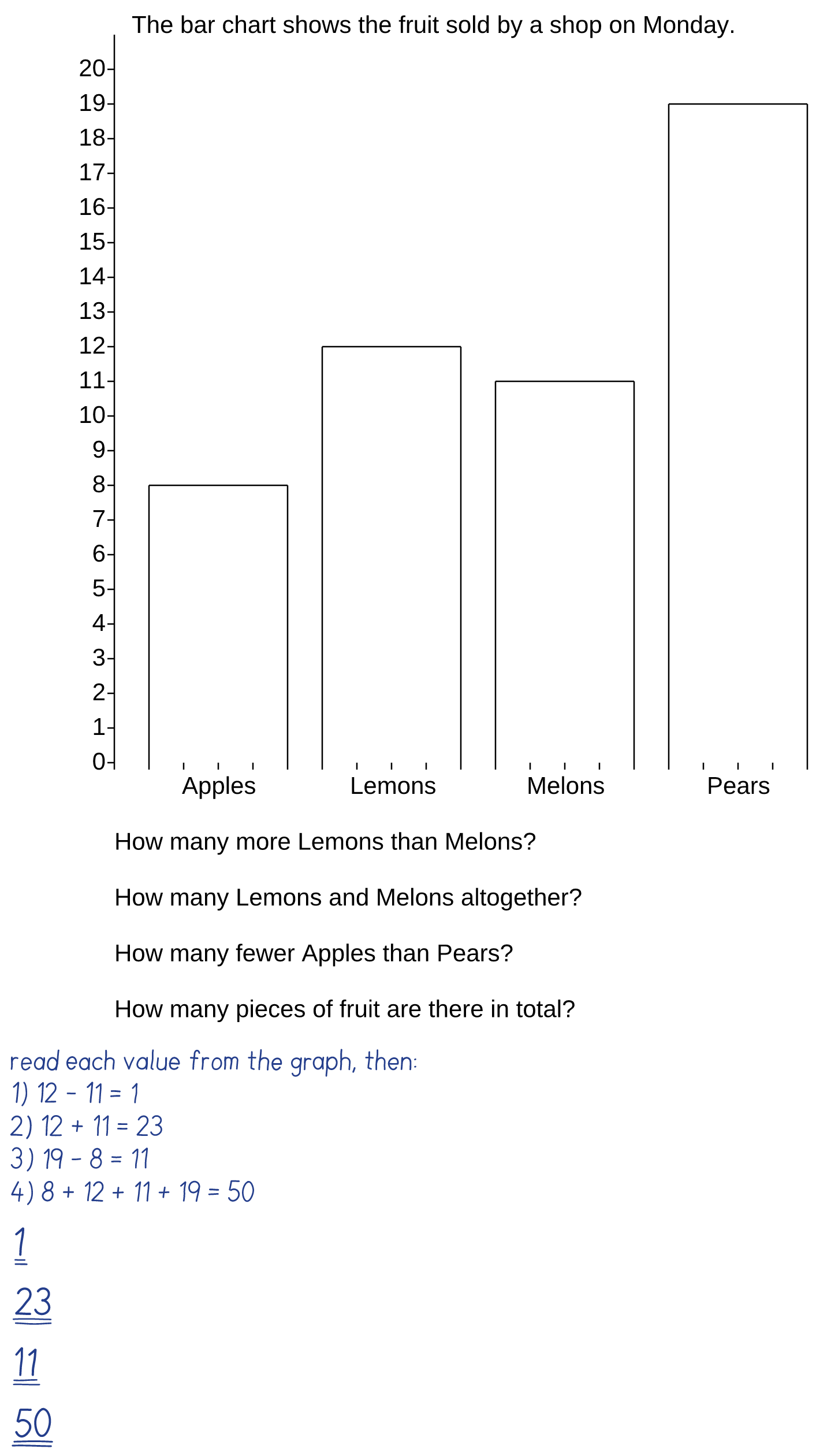
- Read every bar: Apples 8, Lemons 12, Melons 11, Pears 19.
- "In total" means add them all.
- 8 + 12 + 11 + 19 = 50.
The common mistake
Misreading a bar by looking at the wrong gridline. Use a ruler or the edge of a piece of paper to go straight across from the top of the bar to the scale.
Practise this topic on printed sheets that mark themselves.
Start practisingSuggest an improvement
Something unclear, or a better way to explain it? Tell us and we will improve this page.